
In our previous blog we discussed the founders’ interest in maintaining liberty through the second amendment because of their experience with the English monarchy using the military to enforce local laws, and not just defend the borders from attack.
The Militia as a Safeguard of Liberty
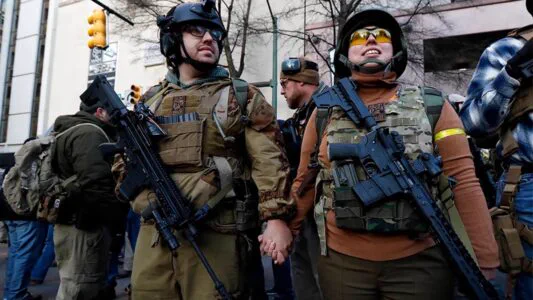
During debates over the ratification of the U.S. Constitution, disagreements arose about military power. Anti-Federalists worried that the new federal government might use a standing army to overpower the states or the people. In response, Federalists argued that a well-regulated militia—composed of armed citizens—would serve as a counterbalance to federal power.
In Federalist No. 46, James Madison argued that state militias, drawn from the people themselves, would make it difficult for any national army to impose tyranny. He emphasized that these militias would be led by officers appointed by the states and composed of citizens with a personal stake in the preservation of liberty.
Similarly, Federalist No. 29, written by Alexander Hamilton, described the militia as the “most natural defense of a free country.” While Hamilton supported federal oversight to ensure organization and discipline, he shared the broader assumption that reliance on citizen militias reduced the need for a large standing army, which many believed posed the greatest threat to freedom.
Liberty, Civic Responsibility, and the Second Amendment
When the Bill of Rights was adopted, the Second Amendment reflected these intertwined ideas. The reference to a “well-regulated militia” acknowledged the Founders’ belief that a free state depended on citizens who could participate in its defense. At the same time, the protection of “the right of the people to keep and bear Arms” reflected concerns that a central government might otherwise disarm the population, undermining both local defense and political liberty.
In short, the Founders’ discussions of arms were not primarily about recreation or sport. They were rooted in historical memory, political theory, and practical experience. Militias, arms, and liberty were linked in their minds because they believed that a free society required both civilian control of the military and a population capable of defending itself against external threats and internal abuses of power.
Madison emphasized that militias were composed of citizens with personal ties to their communities and states, making them unlikely instruments of tyranny.
Similarly, the Massachusetts Declaration of Rights (1780) declared:
“The people have a right to keep and to bear arms for the common defence. And as, in time of peace, armies are dangerous to liberty, they ought not to be maintained without the consent of the legislature; and the military power shall always be held in an exact subordination to the civil authority.”
— Massachusetts Declaration of Rights (1780).
These provisions show that, at the state level, arms-bearing was consistently discussed alongside civilian control of the military and resistance to concentrated power.
The Declaration of Independence later reflected this concern by listing grievances against King George III, including accusations that he had kept standing armies in the colonies during peacetime and made the military “independent of and superior to the civil power.” These experiences reinforced the belief that liberty depended on keeping military force under civilian control and widely distributed among the people rather than concentrated in the hands of the state.
Taken together, these discussions reveal a consistent theme: the Founders and ratifying states linked militias and the right to bear arms to liberty because they believed political freedom depended on preventing the concentration of military power in the hands of a centralized government. Their focus was not abstract theory alone, but practical experience with imperial rule, standing armies, and the need to keep military force subordinate to civilian society.