
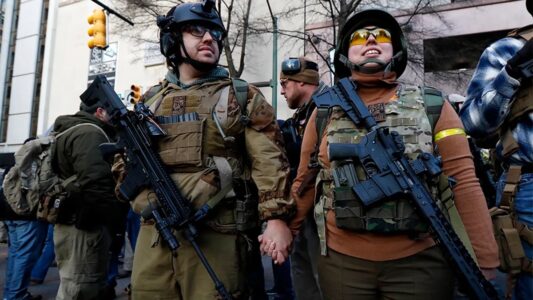
The Constitution is not optimistic about government virtue. It is engineered around distrust. Each safeguard exists because the Founders believed tyranny is a natural tendency of power, not an aberration.
Why the Founders Talked About Militias, Arms, and Liberty
To understand why the Founders included the Second Amendment in the Bill of Rights, it is essential to examine the historical conditions they inherited and the problems they were trying to prevent. Their discussions of militias, arms, and liberty were shaped by lived experience—particularly their experience with imperial rule, standing armies, and the concentration of military power.
English Roots and the Fear of Standing Armies
The Founders’ ideas about arms and liberty can be traced to English political history, especially the English Bill of Rights of 1689, which recognized that certain subjects could possess arms under law. This provision emerged after conflicts in which English monarchs used loyal standing armies to suppress political opposition and disarm critics, leading to widespread fear of military domination by the Crown. By the eighteenth century, English political thought widely held that standing armies in peacetime were dangerous to liberty, especially if they were controlled by a centralized authority rather than by civilian institutions. This suspicion carried directly into the American colonies, where British troops were increasingly used not for defense against foreign threats, but to enforce imperial policies and maintain order among civilians.
Colonial Experience and the American Revolution
In colonial America, defense was largely handled by local militias composed of ordinary citizens, rather than professional soldiers. These militias were drawn from the community and were seen as extensions of civilian society, not separate from it. When tensions with Great Britain escalated, British efforts to control or disarm colonial militias were perceived as direct threats to local autonomy and liberty.
State Constitutions and Early American Thought
After independence, several states adopted constitutional provisions explicitly linking the right to bear arms with fears of standing armies. For example, Pennsylvania’s 1776 Declaration of Rights and Massachusetts’s 1780 Declaration of Rights both affirmed that citizens had the right to keep and bear arms, while also warning that standing armies in times of peace were dangerous to liberty and must remain subordinate to civil authority.
These documents illustrate that, for many Americans of the Founding era, arms-bearing was not viewed in isolation. It was closely connected to broader concerns about self-government, local control, and the prevention of tyranny.
Today we are faced with similar threats to our individual and collective liberties. It is likely that the founders would be turning in their graves if they knew the scope and extent of the federal military and the numbers and powers of federal law enforcement. In their minds, these powers were intended to remain in the hands of the states and the local municipalities. A strong federal army or law enforcement regime would have been viewed as a threat to individual liberties. Certainly the military and federal law enforcement play important roles in protecting us, but they also pose a significant threat to our individual liberties, which the founders were trying to protect us from.