Idaho municipalities are installing license plate reader cameras at a rapid pace. Some did it with a public vote. Many did not.
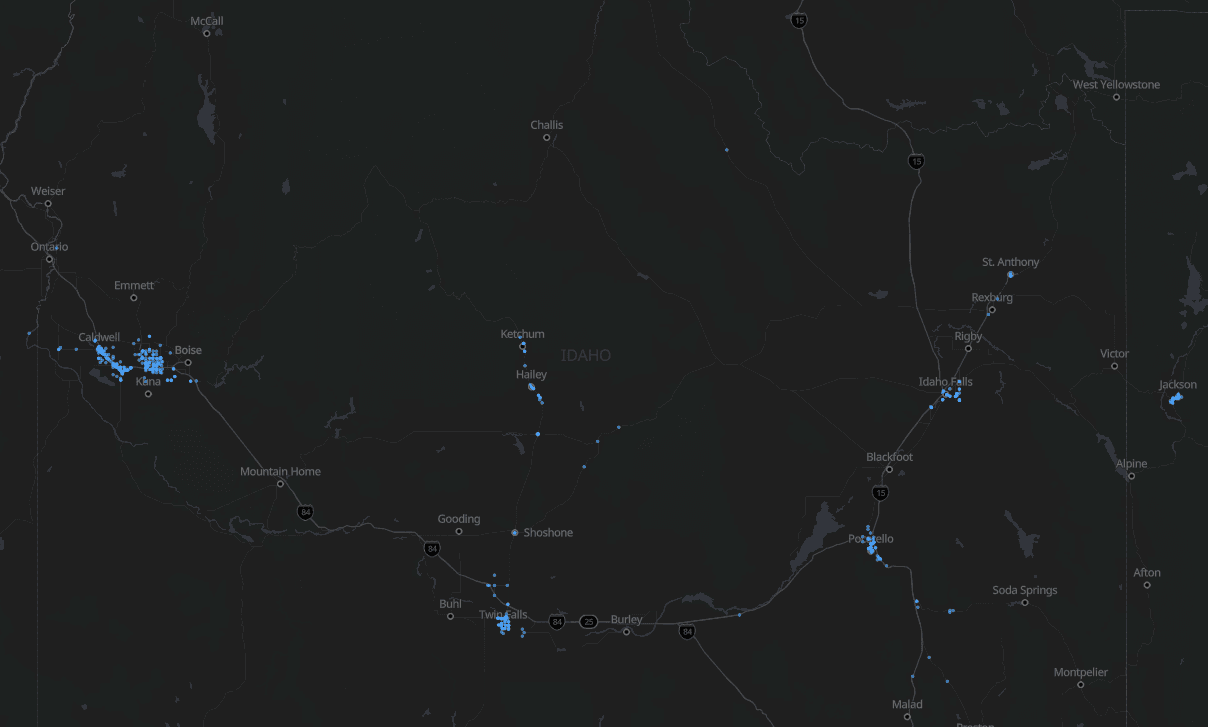
Documented camera locations across Idaho
Idaho municipalities, plus additional cameras in unincorporated county areas
Voted on it.
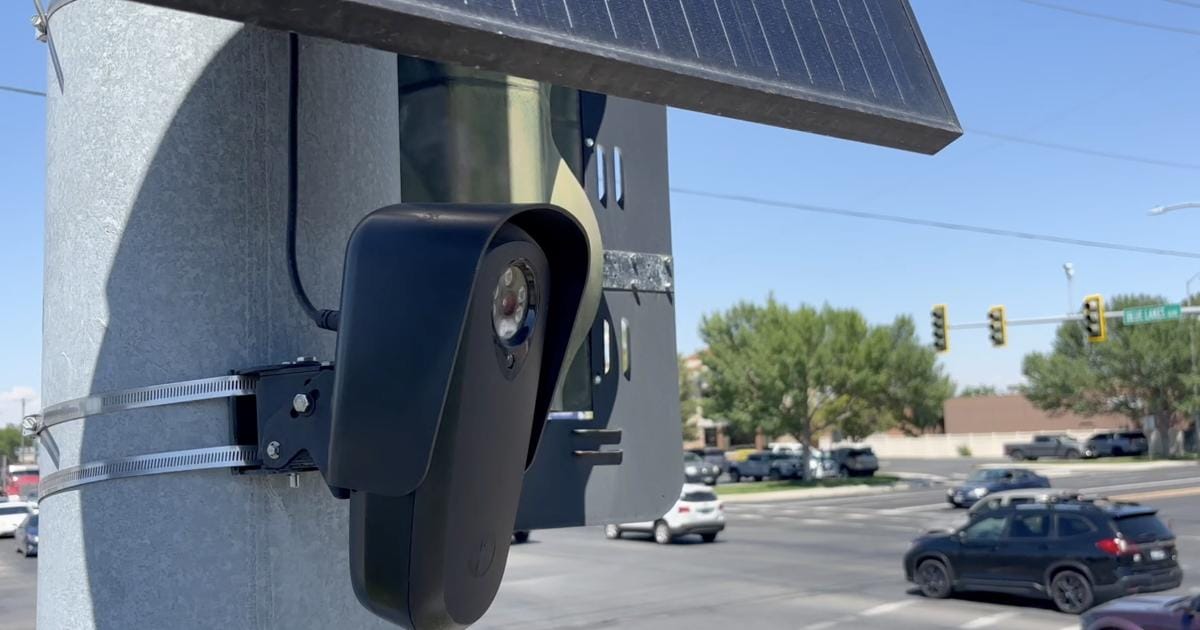
Automated license plate readers (ALPRs), most commonly sold in Idaho by a company called Flock Safety, are spreading fast across the state. These aren’t ordinary traffic cameras: they use AI to scan every passing license plate, log the time and location, and store that data, allowing police to search where any vehicle has been over time, regardless of whether that vehicle’s owner is suspected of anything.
Public records show at least 486 documented camera locations across 47 Idaho municipalities, plus additional cameras in unincorporated county areas.
City
Cameras
Approx. annual cost
Cameras: 40 (up from 12 in December 2023)
Approx. annual cost: ~$43,800/yr
Cameras: 40+
Approx. annual cost: ~$30,000/yr
Cameras: 36
Approx. annual cost: ~$10,000/yr
Cameras: 20
Approx. annual cost: ~$40,200/yr
Cameras: Expanding from 18 to 66 citywide
Approx. annual cost: —
In some cities, the process was transparent, approved through public votes and council meetings. In others, it wasn’t. In Wilder, the police chief and mayor approved cameras on their own, with no public meeting and no council vote. A resident who pushed back, Tyler Cain, put it simply:
“It should have gone through three readings and then a vote — and that didn’t happen.”
— Tyler Cain
This isn’t a partisan issue, it’s a due process and government accountability issue, and Idahoans across the political spectrum have raised the same concerns.
As Saira Hussain, a senior staff attorney at the Electronic Frontier Foundation, explained:
“99% of people who are driving around are never pinged on any sort of hotlist, but their information can still be searched. It is a mass surveillance technology that is being used without a warrant or without suspicion, but it casts a wide net over everybody in the driving public.”
— Saira Hussain, senior staff attorney, Electronic Frontier Foundation
There have already been real-world misuse concerns. A former Jerome County Sheriff was investigated after allegedly using Flock cameras to search for his own wife’s vehicle — the Idaho Attorney General’s Office said it could not find sufficient evidence to prove a crime, but the case illustrates exactly the kind of unsupervised access critics warn about.
Contract terms have also raised concern. Caldwell’s agreement with Flock includes language granting the company a broad, “irrevocable, worldwide license to use” city-collected data — language a resident has formally challenged as inconsistent with how Idaho law restricts use of this data.
In 2025, the Idaho Legislature passed Senate Bill 1180, restricting ALPR data access to authorized law enforcement purposes only. That’s a meaningful legal guardrail — but it only works if it’s actually followed and enforced.
Idaho resident and DeFlock Idaho member Tyler Cain has filed tort claims against both Caldwell and Wilder, alleging their Flock contracts violate this law. Caldwell has confirmed its city attorney’s office is reviewing the contract language.
DeFlock Idaho is a volunteer-driven group tracking camera deployments across the state and pushing for legal accountability where cities may be violating Idaho law.
Idaho Rights Coalition is proud to support this work. Government surveillance without a public vote, and enforcement without accountability, are exactly the kind of overreach we exist to push back on — whatever form it takes.
Check whether your city council held a public vote before installing cameras — if it didn't, ask them why.
Contact your city council to request they review their Flock contract language against Idaho SB 1180.
Follow and support DeFlock Idaho's work.
Idaho Freedom Foundation
DeFlock Idaho / DeFlock The USA